
Hair loss in women can be normal or abnormal, depending on the extent of your hair loss. Hair loss in women is when women lose more than 125 hairs per day.
This can lead to hair loss, baldness, and thinning hair. Many dermatologists can help you find the cause of your hair loss and treatment options. here we discuss about some hair loss reasons in women.
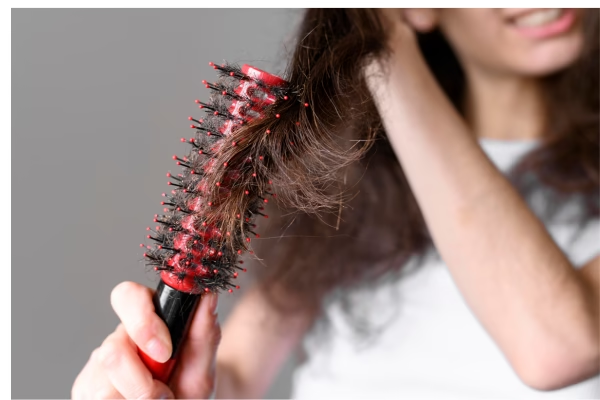
Table of Contents
Overview
What is hair loss in women ?
The medical term for hair loss is alopecia. Hair loss in women is simply when women start losing a lot of hair unexpectedly. Normally, humans lose 50 to 100 hairs per day, but if you are losing more than 125 hairs per day, it can be called hair loss.
Hair loss is part of a natural balance, meaning that while hair loss is ongoing, some hairs fall out and some grow back. This balance is expressed when hair falls out and less hair grows back, it is called hair loss. Hair loss in women can occur at any age, but by the age of 50, 40% of women have significant hair loss. One experience of women experiencing thinning hair is their ponytail suddenly becoming thinner.
How does hair grow?
To understand why women lose hair, it’s important to understand how hair grows. Hair growth begins in your follicles, the pores in your skin where hair grows and new cells are formed. These new cells come together and harden, forming a hair shaft, and hair grows in three stages.
- The anagen phase (growing phase) : In the anagen phase, 90% of the hair on your head is in the active growth phase at any given time, and this can last from two to eight years. Most people’s hair grows about six inches a year.
- The catagen phase (transition phase) : This phase is mainly a transition phase. It lasts for two to three weeks. During this phase, your hair follicles shrink and new hair growth stops.
- The telogen phase (resting phase) : The telogen phase is the final stage of your hair growth. This phase lasts two to four months and during this time your hair rests and eventually falls out, and the growth cycle begins again.
Hair is constantly growing and falling out, so hair loss is not immediately noticeable, but when suddenly many hairs enter the resting phase at the same time or the hair follicles are damaged during the growth process, hair loss becomes more severe and you notice it.
Many things can interfere with the hair growth cycle, such as medications, illnesses, infections, or chemicals that prevent hair from forming properly, as well as age, hormones, stress, and the way you style your hair. These factors are also the hair loss reason in women. some natural hair growth remedies also help to minimize hair fall in women.
Symptoms and Causes
symptoms of hair loss in women
There are many early symptoms of hair loss in women, which may include:
- Your ponytail feels short.
- Your hair feels like it’s breaking.
- Your scalp is visible through your hair.
- You have noticeable patches of thinning or thinning hair, including on the top of your head.
- You notice excessive hair loss.
- You have more hair left in your comb than usual when you comb your hair.
- You notice a lot of hair left on your pillow, towel, or clothes, or in the shower drain after a bath.
- You have patches on your scalp .
what causes hair loss in women ? or hair loss reasons in women
There are many hair loss reasons in women, following are some major reasons of hair fall in womens :
- Sudden changes in your eating habits (rapid weight loss).
- Stress.
- Chemical hair treatments.
- Damage to your hair follicles.
- Treatments like chemotherapy or radiation therapy.
- Underlying health conditions like abnormal thyroid, anemia, vitamin deficiencies.
- Hormonal changes (pregnancy or menopause).
- Hormonal changes (pregnancy or menopause).
- Certain medications and supplements, such as blood pressure medications, prescription drugs, high doses of vitamin A
- Genetic predisposition, meaning it’s in your biological family’s history.
- Childbirth.
- Severe infection or high fever.
- A poor diet with too little protein and calories.
- Severe iron deficiency.
- Vitamin D deficiency.
These are the common hair loss reasons in women .
Female pattern hair loss (FPHL) is a common type of hair loss, also known as androgenetic alopecia. It mainly occurs in people in their 40s, 50s, or 60s. It is a genetic condition, meaning if your mother or father suffers from hair loss, you may also inherit the gene that causes it.
After menopause, FPHL increases more, meaning that during menopause, hormonal changes occur more frequently. During this time, estrogen levels drop significantly, which is responsible for the shrinkage of hair follicles. Continuous hair loss stops new hair growth.
The reason why women with polycystic ovary syndrome lose hair at a very young age is hormonal changes. Women with PCOS produce more male hormones like androgens – testosterone, and these hormones can cause hair loss in women.
Your hair care routine can also contribute to your hair loss, i.e. harsh hair treatments, straightening or curling irons, and tight hairstyles, i.e. tight braids, can damage the hair shaft and follicles, which can cause your hair to break and lead to traction alopecia.
Diagnosis
There are several types of tests used to diagnose hair loss in women. These may include the following factors:
- Blood tests : can help diagnose your hair loss by checking your vitamin and mineral levels and hormone levels, such as vitamin D, vitamin B6, and iron. Blood tests can also help diagnose your hair loss by checking your hormone levels, such as thyroid.
- Light microscopy : This is used by the doctor to examine your scalp using a light microscope to look for any abnormalities in your hair follicles.
- Pull test: For this, your doctor gently pulls a section of your hair and sees how many hairs come out, which tells you how much hair you have lost.
- Scalp examination: By looking at your scalp, your doctor can check for inflammation or infection on your scalp, as well as where your hair is falling out.
- Biopsy: A biopsy is when a small sample of skin from your scalp is gently scraped off and sent to a lab for testing. This is called a scalp biopsy.
Treatment of hair loss in women
Treatment for hair loss in womens depends on the exact cause of your hair loss and its severity. Below I have listed some common treatment options.
- Nutritional supplements: Hair loss can also be caused by nutritional deficiencies. If your hair loss is due to nutritional deficiencies, then vitamins (biotin, vitamin D, etc.) and minerals (iron, zinc) as well as essential supplements can improve your hair health and promote hair growth. Before starting any supplements, you should consult your doctor to ensure that they are safe and appropriate.
- Oral medication : Oral medications, such as finasteride, are commonly used to treat male pattern baldness. They are not usually prescribed to women because they can have side effects, but some women may benefit from medications such as spironolactone or oral contraceptives to help regulate hormones and reduce female pattern hair loss.
- Topical minoxidil : Many healthcare providers recommend using minoxidil. You can buy it over the counter in a 2% or 5% solution. You must follow the instructions exactly and use the product for a long time. Do not use this product if you are pregnant, planning to become pregnant, or breastfeeding. You may need to use minoxidil for several days to prevent hair loss and promote hair growth. Minoxidil is suitable for both men and women. Minoxidil is available in topical liquid and foam forms, as well as oral capsules.
- Platelet-rich plasma: Platelet-rich plasma is a treatment that involves taking some of your blood plasma and injecting it into your scalp. Although it is FDA-approved for orthopedic use, it is not specifically approved for hair regrowth.
- Microneedling : Microneedling is a treatment that is often used in conjunction with topical minoxidil, which we discussed above. In this type of treatment, doctors use tiny needles to make tiny holes in your scalp and then apply the topical treatment.
- Low-energy laser: This is a very effective hair loss treatment. This treatment helps to stimulate your hair follicles, which means you are given laser combs and caps that use low-energy light. There are many types of laser combs currently available on the market, but only a few are FDA approved.
This way, your doctor can find the cause of your hair loss and treat it, which can help reduce your hair loss. Treatment for hair loss depends on the type and severity of hair loss. Some types of hair loss are permanent while others are temporary, so managing any underlying health conditions can help reduce hair loss and help hair grow back. Your healthcare provider can recommend the right treatment for you based on your hair condition.
Conclusion
Hair loss in women can be normal or abnormal. The most common cause of hair loss in women is female pattern baldness, which we call androgenetic alopecia. There are many other causes of hair loss as we have seen above.
There are many OTC medications available to treat hair loss. These medications can help reduce your hair loss and help your hair grow back, but it is more important to treat the underlying cause of hair loss than other hair loss treatments.
Talk to your doctor about many problems such as hair loss or thinning. They can treat your symptoms appropriately. Although hair loss is not dangerous, it is an emotionally debilitating experience that can negatively affect your self-esteem and social life. Some people find hair loss distressing. If this is the case, talking to a mental health professional can help, or some women can find relief by changing their hairstyle or wearing a wig.
1 thought on “Hair loss reasons in women”